
Do your teeth overlap when you smile? Maybe you have a noticeable gap between two teeth, or your upper and lower teeth don’t meet comfortably when you bite down. If you are considering orthodontic treatment but do not want traditional metal braces, you may be wondering: Can Invisalign fix crowded teeth, gaps, and bite problems?
For many patients, clear aligner treatment can address mild to moderate orthodontic concerns by gradually moving teeth into planned positions. Invisalign aligners are removable, nearly invisible, and custom-designed to apply controlled forces to the teeth. However, not every orthodontic problem is treated the same way, and some complex cases may require traditional braces, additional orthodontic appliances, or another approach.
The American Association of Orthodontists (AAO) explains that orthodontic treatment can correct problems involving tooth alignment and bite, including crowding, spacing, overbites, underbites, and crossbites.
At Machesney Dental Studio in Machesney Park, Dr. Esha Munshi can evaluate your teeth and bite and help determine whether clear aligners or another orthodontic option fits your needs.
What Is Invisalign?
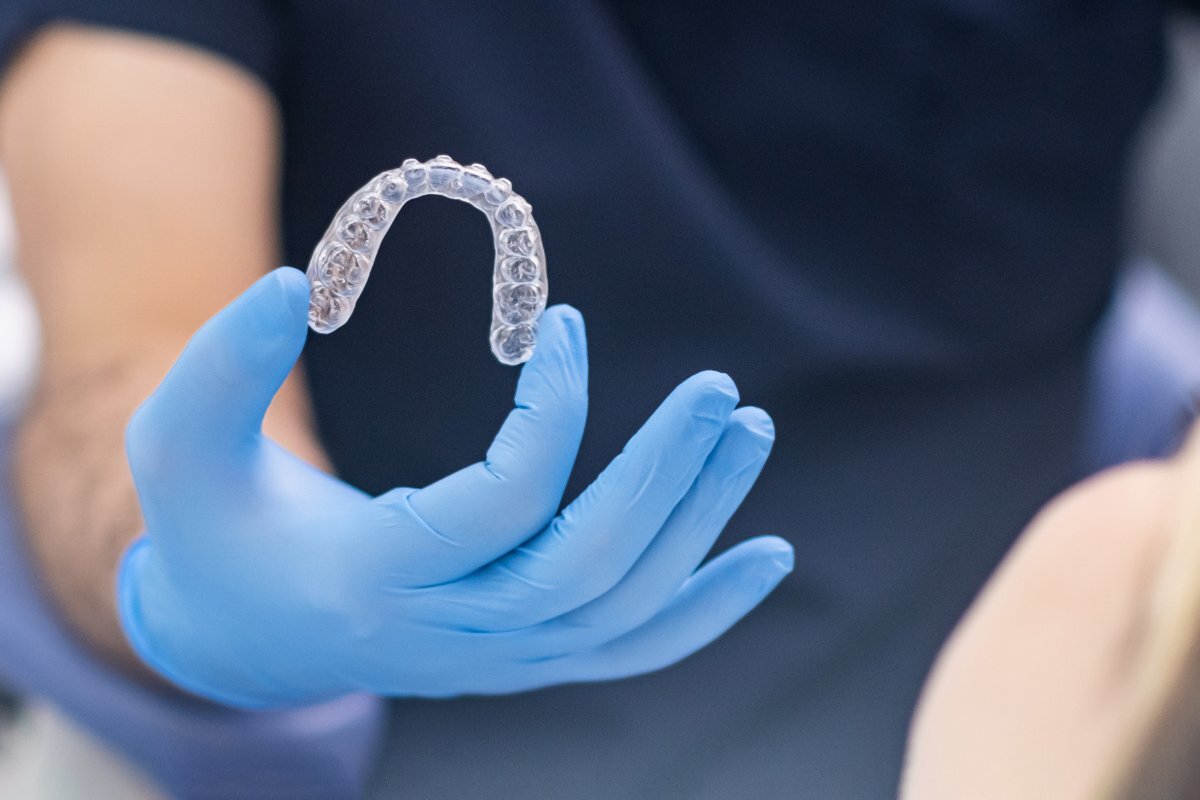
Invisalign is a system of clear, removable orthodontic aligners designed to gradually move teeth.
Instead of using brackets and wires attached to the teeth, aligners fit over the teeth and are replaced according to the treatment plan. Each series makes incremental changes to tooth position.
The AAO describes clear aligners as an orthodontic appliance that moves teeth and addresses certain orthodontic problems.
Because aligners can be removed for eating, drinking, brushing, and flossing, some patients find them more convenient than fixed braces.
However, successful treatment requires consistent wear and following your dental professional’s instructions.
Can Invisalign Fix Crowded Teeth?
In many cases, yes.
Crowding occurs when there is insufficient space for teeth to fit properly within the dental arch. Teeth may overlap, rotate, or shift too far forward or back in the arch.
Clear aligners in Machesney Park can gradually move crowded teeth toward planned positions.
The exact treatment approach depends on how much crowding is present and why it developed.
For mild or moderate crowding, aligners may create or use available space and gradually improve tooth alignment. More severe crowding may require additional techniques or a different orthodontic approach.
The AAO notes that the appropriate treatment depends on the individual’s orthodontic problem, age, dental development, and other factors.
What Causes Crowded Teeth?
Crowding can develop for several reasons.
One factor is the relationship between tooth size and available jaw space. Genetics can also influence jaw development and tooth position.
Crowding may also become more noticeable as teeth shift over time.
In children and teenagers, tooth development and the eruption of permanent teeth can affect alignment. In adults, teeth may gradually move because of changes in the supporting structures or because a retainer is no longer being worn.
Crowding is more than a cosmetic issue in some patients. Overlapping teeth can make certain areas harder to clean, potentially making daily plaque removal more challenging.
That is one reason orthodontic evaluation can be useful even when the primary concern is appearance.
Can Invisalign Close Gaps Between Teeth?
Yes, clear aligners can close certain spaces between teeth.
A gap between two teeth is called a diastema, although spaces can occur in several areas of the mouth.
Gaps can develop for different reasons, including tooth size, missing teeth, frenum position, jaw development, or tooth movement.
Clear aligners can gradually move teeth closer together when the underlying cause and tooth positions are suitable for aligner treatment.
However, simply closing a gap does not always address why the gap exists.
For example, if a space is due to a missing tooth, closing it may not be the right solution. Depending on the situation, orthodontic treatment may instead create or maintain space for a dental implant or another restoration.
A comprehensive evaluation is therefore important before beginning treatment.
Can Invisalign Correct Bite Problems?
The answer becomes more individualized here.
A bite problem occurs when the upper and lower teeth do not come together in an ideal relationship.
Common bite concerns include:
- Overbite
- Underbite
- Crossbite
- Open bite
- Excessive spacing
- Crowding
The AAO recognizes these as common orthodontic problems that can often be evaluated and treated with orthodontic care.
Clear aligners can correct certain bite problems by changing tooth position and, in some treatment plans, controlling how the upper and lower arches relate.
But aligners alone may not correct severe skeletal discrepancies.
For complex cases involving jaw development or significant skeletal differences, an orthodontist may recommend additional treatment.
What Is an Overbite?
An overbite occurs when the upper front teeth overlap the lower front teeth vertically.
Some vertical overlap is normal, but an excessive overbite can create functional or cosmetic concerns.
Depending on the cause and severity, orthodontic treatment can move teeth to improve the relationship between the upper and lower arches.
Clear aligners may be appropriate for some patients with overbite concerns.
However, the dentist or orthodontic provider needs to determine whether the problem is primarily related to tooth position or involves the underlying jaw relationship.
Can Invisalign Treat an Underbite?
An underbite occurs when the lower teeth extend in front of the upper teeth when the mouth is closed.
Some underbites are primarily dental, meaning tooth position is a major factor. Others relate to jaw position or growth.
Clear aligners may be used in selected cases, particularly when tooth movement can address the problem.
More significant skeletal underbites may require treatment beyond aligners, particularly when jaw position is the primary cause.
That is why an in-person evaluation is essential before assuming that Invisalign is the appropriate solution.
What About Crossbites?
A crossbite occurs when one or more upper teeth bite inside the lower teeth rather than outside them.
Crossbites can affect individual teeth or larger sections of the dental arch.
Some dental crossbites can be corrected with orthodontic tooth movement. Others may involve differences in jaw width or development.
The appropriate treatment depends on the location and cause of the crossbite.
An examination can help determine whether clear aligners can provide the necessary tooth movement or whether another orthodontic approach would be more predictable.
Can Invisalign Fix an Open Bite?
An open bite occurs when certain upper and lower teeth do not contact when the mouth is closed.
Open bites can have different causes, including tooth position, jaw development, and oral habits.
Clear aligners may work for some open-bite cases, but treatment complexity varies widely.
If the open bite is linked to a significant skeletal problem or another underlying issue, aligners may not be enough on their own.
Your provider can evaluate the bite and explain what treatment can realistically accomplish.
How Common Are Orthodontic Problems?
Orthodontic concerns are widespread in the United States.
The AAO estimates that approximately 4 million Americans are currently undergoing orthodontic treatment, and about one in four orthodontic patients is an adult.
This means orthodontic treatment isn’t limited to children and teenagers.
Adults may seek treatment because their teeth have shifted, they did not receive orthodontic treatment earlier in life, or they want to improve their bite and tooth alignment.
Clear aligners have also expanded orthodontic options for adults who prefer a less noticeable appliance.
How Long Does Invisalign Treatment Take?
No single Invisalign timeline applies to every patient.
Treatment length depends on the number and type of tooth movements required, the severity of the alignment problem, the patient’s age, biological response, and adherence to the treatment plan.
Some relatively straightforward cases may take less time, while complex bite or alignment problems can require considerably longer treatment.
One of the most important factors patients can control is wearing their aligners as directed.
Removing aligners for extended periods or frequently failing to wear them can interfere with the planned sequence of tooth movement.
Your dentist or orthodontic provider can provide a personalized estimate after evaluating your teeth.
How Long Do You Wear Invisalign Aligners Each Day?
Patients should follow the wear schedule their dental professional prescribes.
Invisalign states that its aligners are generally designed to be worn for approximately 20 to 22 hours per day, depending on the treatment plan.
You typically remove the aligners to eat, drink anything other than water, brush, and floss.
Consistency matters because aligners only work while you wear them.
If you frequently leave them out, your teeth may not track with the planned movements.
Are Invisalign Aligners Comfortable?
Clear aligners are generally designed to apply controlled pressure to move teeth gradually.
That pressure can cause temporary soreness or tightness, especially when you move to a new set of aligners.
Mild discomfort doesn’t necessarily mean treatment is going wrong. It can occur as teeth respond to the planned movement.
However, discuss severe or persistent pain with your dental professional.
Also have an aligner that is cracked, sharply irritating the gums, or no longer fitting properly evaluated.
What Are the Benefits of Invisalign?
For appropriate patients, clear aligners offer several practical benefits.
Nearly Invisible Appearance
The clear material makes aligners considerably less noticeable than traditional metal braces.
This can appeal to adults and teenagers concerned about the appearance of orthodontic appliances.
Removable Design
You can remove aligners when eating and when performing your regular oral-hygiene routine.
Easier Brushing and Flossing
Because the aligners are removable, you can brush and floss without cleaning around brackets and wires.
No Food Restrictions in the Same Way as Fixed Braces
Since patients remove aligners before eating, they don’t have the same appliance-related food restrictions associated with some fixed orthodontic appliances.
However, you must clean the aligners properly and wear them as directed in the treatment plan.
Are There Limitations to Invisalign?
Yes.
Clear aligners are not automatically the best choice for every orthodontic problem.
Some tooth movements can be more difficult to achieve predictably with aligners. Severe rotations, significant vertical discrepancies, complex bite relationships, impacted teeth, and substantial skeletal problems may require additional treatment.
The AAO emphasizes that a qualified dental professional should plan orthodontic treatment after a comprehensive evaluation.
This is why an online smile simulation cannot replace a clinical examination.
What Happens During an Invisalign Consultation?
A consultation typically begins with a discussion about what you would like to change.
Dr. Esha Munshi can examine your teeth, gums, bite, and overall oral health. Depending on your circumstances, photographs, digital scans, X-rays, or other diagnostic information may be used.
The evaluation can help answer questions such as:
- How severe is the crowding?
- What is causing the spacing?
- Do you have an overbite, underbite, crossbite, or open bite?
- Are your teeth and gums healthy enough for orthodontic treatment?
- Would clear aligners be appropriate?
- Are braces or another approach more suitable?
- How long might treatment take?
This individualized approach is important because two people with apparently similar crooked teeth can have very different underlying dental conditions.
Why Oral Health Comes Before Invisalign
Before moving teeth, address existing dental problems.
Untreated cavities, gum disease, broken teeth, or other oral-health concerns can complicate orthodontic treatment.
The CDC reports that 20.5% of U.S. adults ages 20 to 64 had untreated dental caries based on national data from 2017 through March 2020.
This statistic shows why orthodontic treatment shouldn’t be considered separately from overall dental health.
Healthy teeth and gums provide an important foundation for moving teeth safely.
What Happens After Invisalign Treatment?
Finishing the last aligner doesn’t necessarily mean your orthodontic care is over.
Teeth can shift after orthodontic treatment if you don’t wear retainers as directed.
The AAO explains that retainers are an important part of maintaining orthodontic results because teeth can naturally move over time.
Your provider will recommend a retention plan based on your individual treatment.
Following that plan can help maintain the position achieved during active treatment.
Invisalign Treatment in Machesney Park
If crowded teeth, gaps, or bite problems are affecting your confidence or comfort, a consultation can help you understand your options.
At Machesney Dental Studio, Dr. Esha Munshi can evaluate your dental alignment and bite and discuss whether clear aligner treatment may be suitable.
Rather than assuming Invisalign will fix every orthodontic problem, the goal is to determine what treatment can realistically accomplish for your particular teeth.
If clear aligners are appropriate, your treatment can be planned around the movements required to improve alignment and bite.
If another approach would be more appropriate, you can discuss those alternatives as well.
Conclusion
Can Invisalign fix crowded teeth, gaps, and bite problems? In many cases, yes—but the answer depends on the specific orthodontic problem.
Clear aligners can gradually move teeth and may suit many cases involving crowding, spacing, and selected bite problems. For appropriate patients, they offer a removable, less noticeable alternative to traditional braces.
However, severe crowding, complex bite problems, significant jaw discrepancies, and certain difficult tooth movements may require additional orthodontic techniques or a different treatment approach.
The most reliable way to find out whether Invisalign is right for you is through a professional examination.
At Machesney Dental Studio, Dr. Esha Munshi can evaluate your teeth and bite, discuss your concerns, and explain the orthodontic options that may be appropriate for you.
Visit our dental practice in Machesney Park. Book now to schedule your appointment with our team.
Frequently Asked Questions
1. What dental services does Machesney Dental Studio provide?
Machesney Dental Studio provides a range of dental services designed to support preventive, restorative, cosmetic, and orthodontic needs. Dr. Esha Munshi can discuss the appropriate treatment options based on your individual dental condition.
2. Can I ask about Invisalign during my dental appointment?
Yes. You can discuss crowded teeth, gaps, bite concerns, or other alignment issues with Dr. Esha Munshi. She can evaluate your teeth and explain whether clear aligner treatment may be appropriate.
3. Does Invisalign work for adults?
Clear aligner treatment can help many adults with orthodontic concerns. The appropriate treatment depends on the patient’s dental health, tooth position, bite, and the complexity of the required movements.
4. How do I know which orthodontic treatment is right for me?
A professional examination is the best way to determine the appropriate treatment. Your dentist can evaluate your teeth and bite and discuss clear aligners, braces, or other options when appropriate.
5. How can I schedule an appointment with Dr. Esha Munshi?
Contact Machesney Dental Studio in Machesney Park to schedule an appointment with Dr. Esha Munshi. During your visit, you can discuss your alignment concerns and available treatment options.
