
Your headaches and neck pain might be a jaw problem in Loves Park — and many patients are genuinely surprised to hear that. Most people never connect their morning headaches or stiff neck to their jaw. But the temporomandibular joint, or TMJ, plays a powerful role in how your entire head and neck feel every day. At Machesney Dental Studio, Dr. Esha Munshi sees patients from Loves Park who have struggled with these symptoms for months without answers.
What Is the TMJ and Why Does It Matter in Loves Park?
The temporomandibular joint connects your lower jaw to your skull. It sits just in front of each ear. This small joint does an enormous amount of work every time you chew, talk, yawn, or swallow. When it becomes stressed or misaligned, the effects can spread far beyond your jaw.
The muscles and nerves around the TMJ are deeply connected to your head, neck, and shoulders. That is why a jaw problem can mimic so many other conditions. Loves Park residents often visit their primary doctor for headaches before anyone checks their jaw. Understanding the TMJ is the first step toward real relief.
Common Symptoms That Could Signal a Jaw Problem
Many TMJ symptoms feel unrelated to your mouth. That is exactly why they go undiagnosed for so long. If you have experienced any of the following, your jaw deserves a closer look.
- Chronic headaches — especially in the temples or behind the eyes
- Neck stiffness or soreness — particularly in the morning
- Jaw clicking or popping — when you open or close your mouth
- Ear pain or fullness — without any sign of infection
- Facial muscle tenderness — along the jaw or cheekbones
- Difficulty opening your mouth fully — or a locked jaw feeling
- Teeth grinding or clenching — often during sleep
These symptoms vary widely from person to person. Some patients experience only one or two. Others deal with a frustrating combination of all of them. The key is recognizing that they can share a single root cause.
Why Headaches and Neck Pain Are So Often Missed
Jaw-related headaches feel just like tension headaches. They often start at the temples and radiate toward the back of the head. This makes them easy to dismiss as stress or fatigue. Over-the-counter pain relievers may offer brief relief but never fix the underlying problem.
Neck stiffness from a jaw problem works similarly. The muscles that control your jaw attach to your neck and upper back. When those muscles are chronically tight from clenching or misalignment, they pull on your neck. That tension builds up overnight and greets you first thing in the morning.
Ear pain is another symptom that sends patients in the wrong direction. The TMJ sits extremely close to the ear canal. Inflammation in the joint creates a sensation of ear fullness, ringing, or dull aching. Many Loves Park residents visit an ear specialist first, only to find nothing wrong with their ears.
How Night Guards and Dental Care Can Help
One of the most effective ways to address jaw-related symptoms is with a custom night guard. Night guards reduce the pressure your teeth place on your jaw during sleep. They work by creating a cushion between your upper and lower teeth. This prevents grinding and clenching from overworking your TMJ muscles.
Dr. Esha Munshi fits custom night guards at Machesney Dental Studio for patients across Machesney Park and Loves Park. A custom guard fits your exact bite. This is very different from a one-size-fits-all store-bought tray. A properly fitted night guard can dramatically reduce morning headaches and neck soreness within weeks.
Beyond night guards, regular dental evaluations help identify bite problems early. An uneven bite can place unequal pressure on the TMJ over time. Addressing that imbalance through dental treatment reduces long-term stress on the joint. Preventive care is always easier than managing advanced TMJ dysfunction.
What to Expect During a TMJ Evaluation at Machesney Dental Studio
A TMJ evaluation with Dr. Munshi is straightforward and comfortable. Here is what the process typically looks like:
- Symptom review — Dr. Munshi listens carefully to your history of headaches, jaw pain, or neck discomfort.
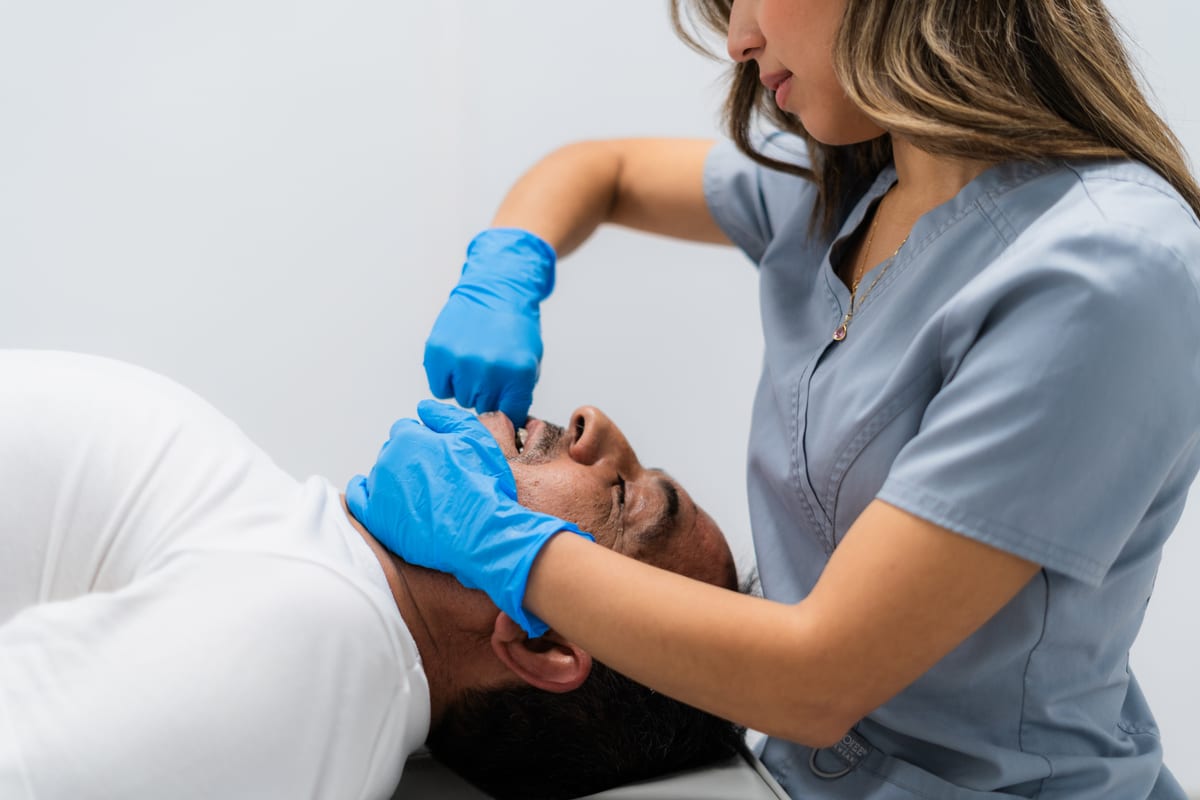
- Physical examination — She checks your jaw’s range of motion and listens for clicking or popping sounds.
- Bite assessment — She evaluates how your upper and lower teeth come together.
- Muscle palpation — She gently checks the jaw and facial muscles for tenderness.
- Treatment planning — She discusses your options, which may include a night guard, bite adjustment, or further imaging.
The evaluation is non-invasive and usually completed in a single visit. You will leave with a clear understanding of what is happening and a plan to address it. Dr. Munshi takes time to explain every finding in plain language.
Jaw Health for the Whole Family in Loves Park
TMJ issues are not limited to adults. Children and teenagers can also develop jaw tension from teeth grinding or orthodontic changes. If your child complains of jaw soreness, ear pain, or frequent headaches, it is worth mentioning to your dentist. Early evaluation can prevent more serious problems later.
At Machesney Dental Studio, we care for patients of all ages. Our Pediatric Dentistry Loves Park services include evaluations for bite development and jaw health in children. Catching jaw issues early in kids makes treatment simpler and more effective. Parents in Loves Park trust our team to look at the full picture of their child’s oral health.
We also offer Cosmetic Dentistry Loves Park for patients whose TMJ symptoms have affected their smile over time. Chronic grinding can wear down tooth enamel and alter the appearance of your teeth. Restoring that enamel is part of a complete treatment approach for some patients.
Take Your Jaw Symptoms Seriously
If you have been living with unexplained headaches, neck stiffness, or jaw clicking, you deserve real answers. These symptoms are not just inconveniences — they signal that your jaw needs attention. Ignoring them often leads to worsening pain and more complex dental problems down the road.
Dr. Esha Munshi and the team at Machesney Dental Studio are here to help Loves Park patients connect the dots. We approach jaw health with empathy, education, and practical solutions. You do not have to keep guessing about where your pain is coming from. Book Now to schedule your appointment with our team.
Frequently Asked Questions
How do I know if my headaches are caused by a jaw problem?
Jaw-related headaches often start near the temples and may be accompanied by jaw soreness, clicking, or neck stiffness. If your headaches are worse in the morning or after eating, your TMJ could be involved. A dental evaluation can help identify whether your jaw is the source of your discomfort.
Can teeth grinding cause neck pain?
Yes, absolutely. The muscles that control your jaw are connected to your neck and upper back. Chronic grinding or clenching tightens these muscles throughout the night. Over time, that tension travels into your neck and can cause significant morning soreness or stiffness.
What is a night guard and how does it help with TMJ?
A night guard is a custom-fitted dental appliance worn over your teeth while you sleep. It creates a protective barrier between your upper and lower teeth to prevent grinding and clenching. This reduces pressure on the TMJ and the surrounding muscles, which often leads to fewer headaches and less jaw pain.
Are TMJ problems common in children?
Yes, children and teenagers can develop TMJ-related symptoms, especially during periods of orthodontic change or stress. Signs to watch for include jaw clicking, complaints of ear pain, or frequent unexplained headaches. Early evaluation by a dentist can prevent symptoms from worsening as your child grows.
How soon can I expect relief after starting TMJ treatment?
Many patients notice improvement within a few weeks of consistently wearing a custom night guard. Results vary depending on the severity of the jaw problem and whether other treatments are needed. Dr. Munshi will monitor your progress and adjust your treatment plan as needed to ensure you get lasting relief.
